Description
Disclaimer: This peptide is for research and educational purposes only. NOT FOR HUMAN CONSUMPTION. It is not intended for diagnostic or therapeutic use without the guidance of a qualified healthcare professional.
$99.00
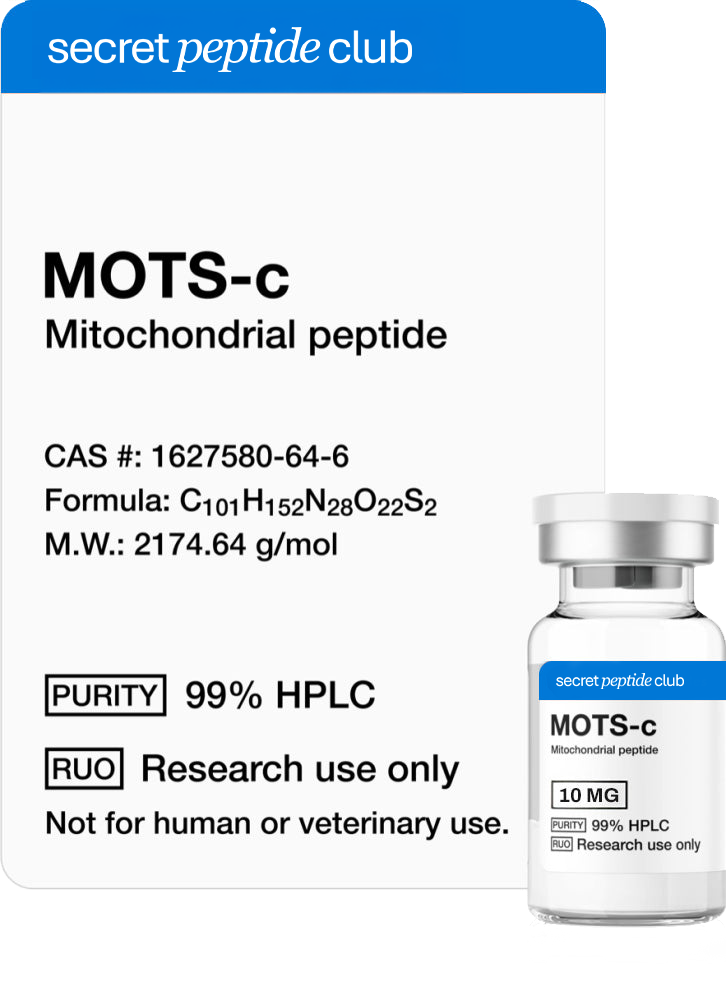
MOTs-C is a mitochondrial-derived peptide studied for its role in metabolic regulation and insulin sensitivity. It is of growing interest in aging and energy metabolism research.
Disclaimer: This peptide is for research and educational purposes only. NOT FOR HUMAN CONSUMPTION. It is not intended for diagnostic or therapeutic use without the guidance of a qualified healthcare professional.
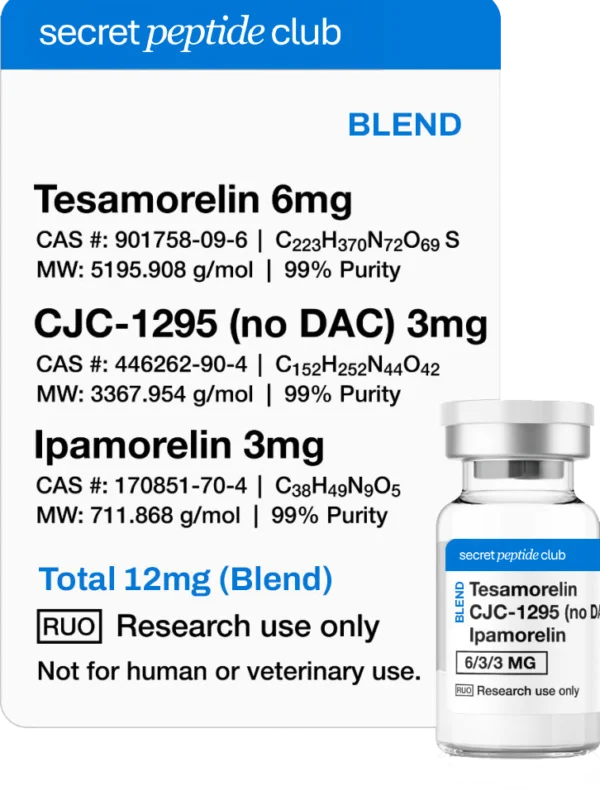
The Tesamorelin (6 mg) + CJC-1295 (No DAC) (3 mg) + Ipamorelin (3 mg) formulation, a 12 mg total blend is designed for research use only to investigate potential synergistic effects on growth hormone–releasing hormone (GHRH) stimulation. This combination is studied for its collective influence on metabolic function, fat oxidation, cellular repair, and endocrine regulation through the coordinated activation of GHRH and GHRP pathways.
This peptide blend is intended exclusively for laboratory research purposes and is not for human or veterinary use.
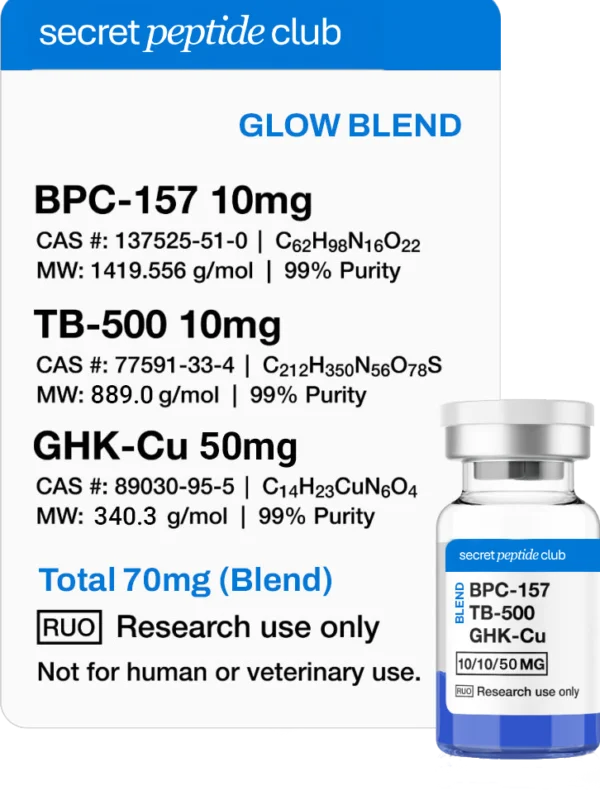
BPC-157 and TB-500 (Thymosin Beta-4 fragment) are two peptides widely investigated for their potential roles in supporting tissue regeneration and repair. Although each operates through distinct biological mechanisms, their combined use has drawn research interest for possible synergistic effects.
BPC-157, a gastric pentadecapeptide derived from a naturally occurring protective protein in the stomach, has been shown in preclinical models to enhance healing of muscles, tendons, and ligaments. It supports angiogenesis (new blood vessel formation) and regulates growth-factor activity, contributing to faster tissue recovery.
TB-500, a synthetic peptide modeled after a segment of the Thymosin Beta-4 protein, is recognized for its influence on cell migration, cytoskeletal reorganization, and inflammation modulation. By promoting cellular movement and repair signaling at the injury site, TB-500 complements the regenerative pathways stimulated by BPC-157.
The combination of these peptides is being studied for its potential to address multiple facets of tissue restoration—from improved circulation and reduced inflammation to enhanced cellular repair—making it a point of interest in models of sports injury and chronic tissue degeneration.
It is important to note that while the findings are encouraging, most research on BPC-157 and TB-500 remains at the preclinical stage, and they are intended strictly for laboratory research use.

PT-141 (Bremelanotide) is a synthetic peptide analog of alpha-MSH studied for its effects on melanocortin receptors. It is of interest in neuroendocrine and sexual behavior research.
All products are intended for research and development use only and are not for human
consumption. The information shared here is for educational purposes and has not been evaluated
by the FDA — nothing on this site is meant to diagnose, treat, cure, or prevent any condition.
© 2026, Secret Peptide Club